
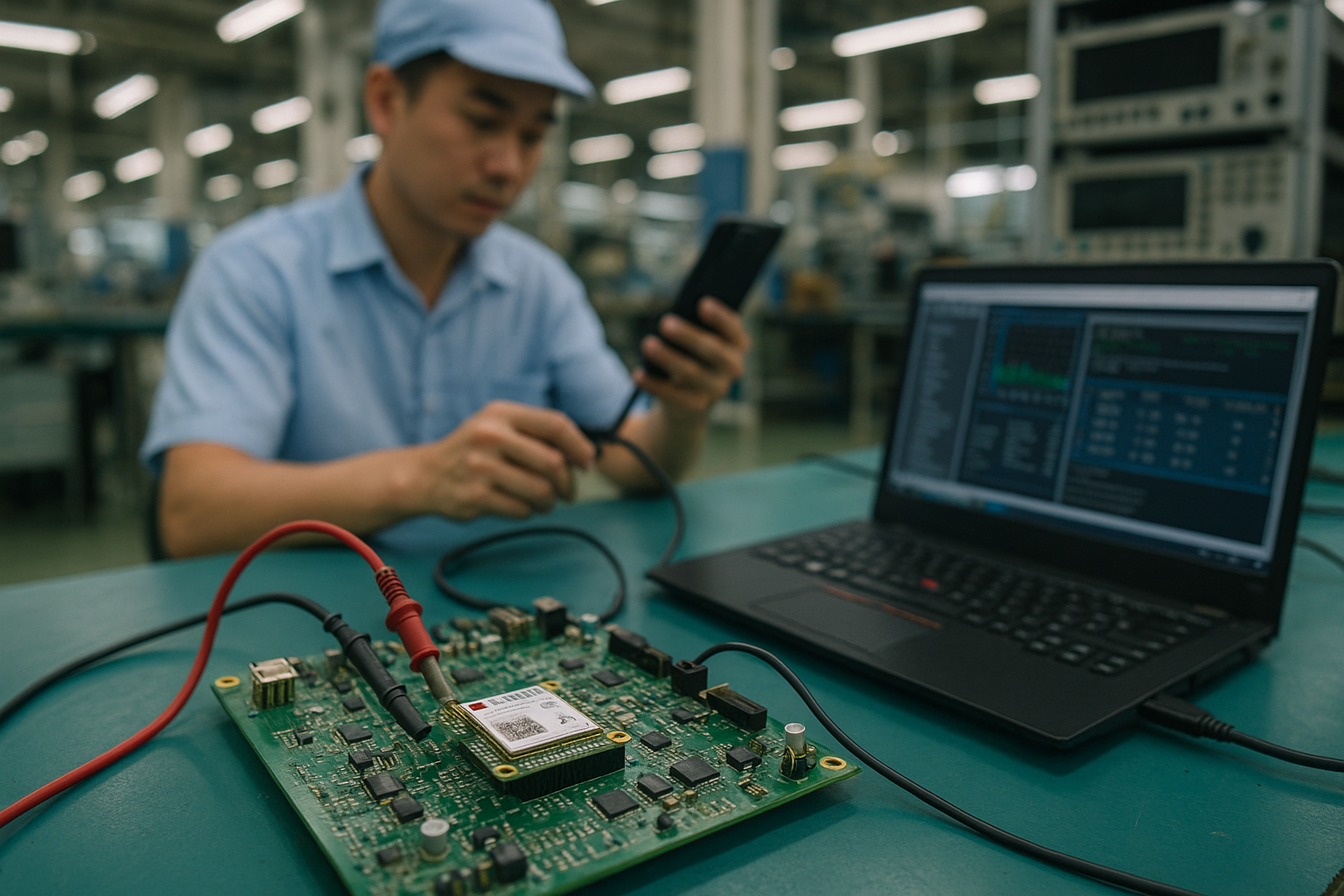
Reliable 4G Connected Device – Key Choices
Choose the right combination of module, antenna, SIM approach, power strategy, and testing to ship a reliable 4G connected device. This choice determines how fast you can launch, how much your team must do, and which technical risks your manufacturing partner takes on.
What makes a reliable 4G connected device for my product?
This section explains what actually changes between options and which decisions affect schedule, team time, and product resilience. A reliable 4G connected device is one that stays online under expected conditions, reconnects quickly when it loses service, and survives power and environmental stresses typical for its use case.
In practice, the choices reduce to three groups: the cellular module and SIM approach, the antenna and enclosure, and the power and software strategies that manage connectivity. Each group trades speed to market against long term robustness and manufacturing complexity.
Which option gets my product to market sooner?
Choosing an evaluation module or a certified plug and play module usually gets you to market sooner because less hardware debugging is required. This option minimizes your team involvement in early builds and shifts most integration work to the manufacturing partner.
Use an evaluation module when you want fast validation, limited custom RF work, and a quick first production run. If you need a smaller form factor or maximum signal performance later, plan a follow up development cycle to move from the evaluation module to an integrated module or custom radio design.
Which module and SIM approach fits my team and timeline?
Picking the cellular module and whether to use a traditional SIM or an embedded SIM is a core product decision, because it affects procurement, carrier approvals, and long term service flexibility. A traditional SIM keeps procurement simple early on, an embedded SIM gives you long term flexibility and remote profile management but needs more coordination up front with operators.
We help decide this by matching your launch plan to operator needs and by handling the SIM or embedded SIM integration with suppliers and carriers. For reference on industry eSIM requirements see the GSMA guidance at https://www.gsma.com.
How do antenna and enclosure choices affect reliability?
Antenna placement, type, and the enclosure materials determine how well a device transmits and receives signals in the field. The same module can behave very differently in two enclosures, so the enclosure and antenna are part of the radio design, not an afterthought.
We prototype antenna placements in early builds and use simple mechanical iterations to reveal worst case signal loss. If your product puts the antenna behind metal or in a tight plastic pocket, expect more development effort and testing to reach the reliability you want.
How should my product handle power peaks and reconnect logic?
Managing power peaks and reconnect behavior is about deciding where intelligence lives and how tolerant the product must be. A reliable 4G connected device should survive transmit power spikes and be able to reconnect automatically after short outages without human intervention.
That means planning for the battery or power subsystem to cover radio transmit peaks, and building reconnect logic into device firmware that balances network retries against battery use. Our teams tune retry timing and power profiles for your expected field conditions so the device behaves predictably for users.
What network fallback and carrier behavior should I plan for?
Network fallback is the plan the device uses when the preferred 4G band or operator is unavailable. A reliable 4G connected device has a clear fallback plan so service stays acceptable even when coverage is poor.
We evaluate target operator networks and recommend module firmware and profile settings that match common operator behavior, then test on representative networks as part of field validation. Where carrier preapproval is required, we coordinate with carriers and handle submission logistics.
What certification and field testing will protect my launch?
Certification and testing are the steps that prove your product works under regulatory and real world conditions, not a formality you can skip. Plans that include early prototype testing and staged field trials catch the issues that lab work alone will not.
We run radio acceptance tests, environmental stress tests, and multi-day field trials in representative locations, then use those results to tune antenna placement, software retries, and power profiles before a wider release. For core radio standards, see the 3GPP resource hub at https://www.3gpp.org for background on protocol requirements.
How we handle this in practice on a real build
On a typical project we recommend starting with a certified module and a simple SIM approach to validate the product concept quickly. We then move to targeted hardware iterations focused on antenna placement and power, run short field trials, finalize carrier submissions, and complete certification tests. That sequence keeps your team focused on product decisions while our engineers manage the technical sequencing.
| Path | Time to market | Team involvement | Long term robustness | When to pick |
|---|---|---|---|---|
| Certified evaluation module, physical SIM | Fastest | Low | Good for early runs | Prototype and early production |
| Integrated module, custom antenna, physical SIM | Moderate | Medium | Balanced | When form factor matters |
| Integrated module, embedded SIM, tuned antenna | Slower initially | Higher upfront | Best for long term service | Products with long lifecycles or global deployment |
Final decision framework – which option for my product
Match your market timing and willingness to invest engineering time to the paths above. If you need to validate a product quickly, start with a certified module and physical SIM. If you need production density and the best signal performance, plan for integrated modules, tuned antennas, and possibly embedded SIM management later.
FAQ
How do I know if I need an embedded SIM or a physical SIM?
Use a physical SIM if you want a simpler, faster supply chain for early batches. Choose an embedded SIM when you need remote operator profile management or global roaming later. Our team helps align the choice with carrier expectations and your rollout plan.
How many rounds of testing should I expect before full production?
Expect an iterative cycle of early lab verification, a small field pilot, and a final acceptance run focused on production test results. The exact number of rounds depends on your product complexity and how much antenna or power tuning is required.
Will antenna work always be handled by my manufacturer?
Manufacturers with product development teams typically handle antenna prototyping and placement, including mechanical changes. We take responsibility for the sequence, coordinate with suppliers, and validate results in the field so your team can focus on product features.
Can you help with carrier approvals and certification?
Yes. Our Shenzhen-based product development and manufacturing team coordinates carrier submissions and regulatory testing, then integrates feedback into the design and test plans. For technical standard background, refer to https://www.3gpp.org.
Ready to discuss how to make your reliable 4G connected device a reality? Contact Shenzhen Futurezen Co. Ltd. through our contact page at /contact/ to share your requirements, prototype status, or manufacturing plan. We will walk through the options and recommend a path that fits your timeline and team.