
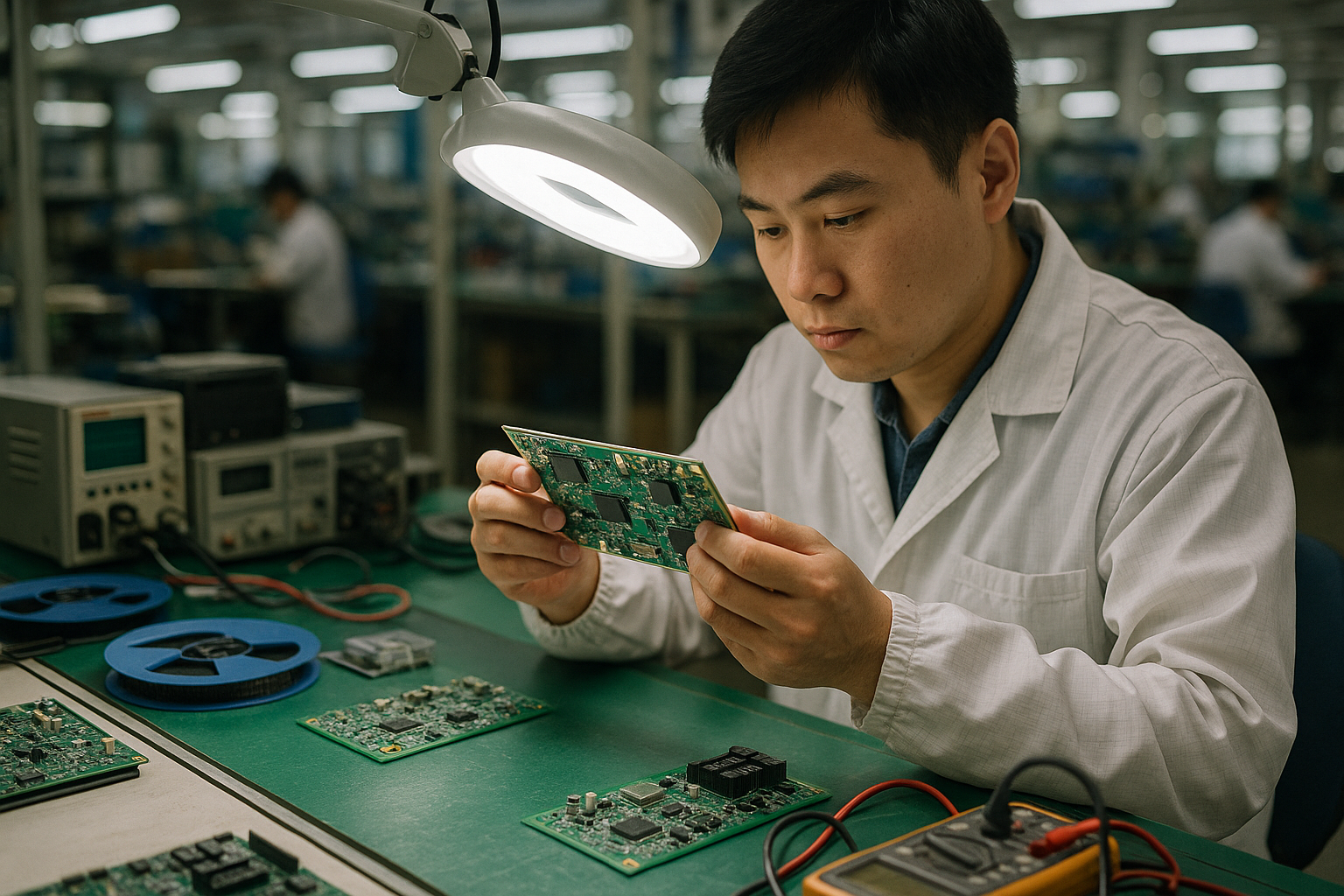
When a part becomes unavailable, you decide how to keep your product moving: wait for verified stock, approve a tested substitute, or source the original part through another route. Component shortages are a normal part of electronics manufacturing; the important decision is how to respond with documented evidence. Futurezen confirms the shortage, compares the realistic options, and delivers the evidence you need to approve the path forward.
What does each option mean when component shortages affect my schedule?
- Wait for the original part. The design and existing evidence stay unchanged, but the build schedule moves until verified stock is available.
- Use a verified substitute. This can keep the build moving, but Futurezen must check the product-specific risks, such as fit, soldering, electrical behaviour, or regulatory documentation.
- Source the original part elsewhere. This can preserve the design and reduce the wait, but the proposed source, lot information, and part traceability require verification before release.
Futurezen narrows the assessment to the evidence that matters for your product. We confirm the shortage, compare realistic sourcing routes, identify the few tests or records needed for a safe decision, and present one recommendation with the tradeoffs made clear.
What documentation will I receive?
We deliver a concise outcome packet you can use for approval and handoff. It includes:
- Shortage confirmation and the affected part list, with a calendar estimate for each option.
- Supplier and importer notes that explain where each candidate part comes from and why that source is available.
- Representative samples explanation and test results, showing the sample batch and the measured outcomes.
- Receiving checks, the inspections our production team performs when parts arrive to confirm they match the specification, and the updated checklists we will use.
- Assembly instruction updates and traceability records showing how parts are tracked into production.
- Production release, the signed confirmation that parts and instructions are ready for manufacturing to begin.
What sourcing evidence will I receive?
The outcome packet identifies the proposed supplier route, lot information, source documentation, and the receiving checks we perform when parts arrive. This gives you documented evidence to approve the route, rather than an unsupported availability claim.
How do I know a substitute will work?
Verification is focused on the product outcomes you care about, not exhaustive lab work for its own sake. Typical checks include:
- Mechanical fit and solderability checks, to confirm the part mounts and attaches as expected.
- Targeted electrical or functional tests when the part affects signal, power, or sensor performance.
- Traceability and visual inspection using receiving checks to confirm part markings and batch identifiers match supplier documentation.
We perform these checks on representative samples from the proposed production batch. The sequence is deliberate: confirm physical fit before spending time on electrical or radio-frequency testing, then update the manufacturing record only after the agreed criteria pass. If the results support the route, we issue the documented production release for your approval.
What would I decide in a wireless connector shortage?
Consider a product whose specified wireless connector becomes unavailable during validation. The product team first learns whether waiting would move the build beyond its acceptable schedule. It can then compare that delay with the evidence needed to approve a substitute or an original part from another source.
For a substitute, Futurezen would check physical fit first, then solder-joint quality and radio-frequency performance where the connector affects the antenna path. If the agreed criteria were met, the outcome packet would show the proposed source, test results, receiving checks, and any assembly-instruction changes.
The product manager can then decide with clear evidence: wait and preserve the existing record, approve the verified substitute to keep the build moving, or use a verified alternate source for the original part. The sequence avoids spending time on functional testing before confirming that the candidate physically fits.
Which route fits my priority?
| Option | What it means for your schedule | What it means for your product | What Futurezen delivers |
|---|---|---|---|
| Wait for original part | The build waits until verified stock returns | Original design and existing evidence remain unchanged | We monitor availability, confirm the source, and provide a revised schedule |
| Use a verified substitute | The build can move forward after the required checks pass | The substitute may require targeted testing and updated manufacturing records | We assess the candidate, run product-specific tests, update instructions, and document approval |
| Source original part elsewhere | The route may reduce the wait, subject to source and delivery verification | Original design is preserved, while traceability evidence is rechecked | We review the source, provide lot and traceability records, perform receiving checks, and document release |
FAQ
What does Futurezen do when component shortages arise?
We deliver a recommended path—wait, use a verified substitute, or source the original elsewhere—with the documented evidence you need: shortage confirmation, supplier or importer notes, test results where needed, and a production release. After you approve, we update the manufacturing instructions and release the agreed route.
How long does verification take?
Timing depends on part availability and the tests needed for your product. Futurezen confirms the calendar estimate after reviewing the proposed source, sample access, and test scope, then records it in the outcome packet.
How do you prove where parts came from?
We include traceability notes that list supplier or importer names, lot numbers, and any documentation provided by the source. This is part of the receiving checks we run when parts arrive.
Do you rely on outside industry information about shortages?
External information can provide context, but the decision for your build should rely on documented source availability and product-specific verification. For broader electronics manufacturing standards and industry guidance, see the Global Electronics Association standards library.
Next steps – discuss your requirements
Discuss your electronics manufacturing requirements, prototype, or production plan with Futurezen at /contact/. We will confirm the available routes, complete the agreed verification, and deliver the documented release you need to approve production. To learn more about our services, see /services/.
Futurezen editorial team