
PCB Prototyping Kit for Product Teams: What to Include Before Manufacturing
Decision first: define the prototype’s purpose-functional validation, fit-check in an enclosure, or pilot production-and tailor the kit for that outcome. That decision directs which files, samples and tests you must provide to the contract manufacturer.
Essential documentation
- Bill of Materials (BOM): ordered list with manufacturer part numbers, preferred suppliers, package types, and at least one approved alternate for critical components.
- Assembly drawings: exploded-view and top/bottom assembly artwork that label connectors, switches, PCB orientation and mounting hardware.
- Fabrication notes: board stack-up, target impedance (if applicable), thickness, copper weights, finish (e.g., ENIG), soldermask and silkscreen colors, and any controlled impedance requirements.
- Regulatory and test requirements: note if the sample must be built to support EMC, safety, or environmental testing so the assembler can avoid prohibited materials or processes.
Files for PCB fabrication
- Gerber or ODB++ files with a clear file map and layer names; include the solder paste and solder mask layers.
- Drill and mechanical drawings with coordinates for mounting holes and cutouts.
- Board outline and panelization guidance, including preferred panel rails and routing details.
- PCB stack-up and impedance targets with reference traces and test coupons when impedance control is required.
Files and data for assembly
- Pick-and-place (centroid) file with X/Y positions, rotation and reference designators; specify the board origin and coordinate system.
- Centroid and BOM cross-reference so the assembler can map part placements to exact BOM lines.
- Stencil specification or paste layer export showing paste apertures and any special paste rules (e.g., windowpanes, thieving).
- Component handling notes: polarity markings, orientation, and whether parts require special placement tools or adhesives.
Hardware, tooling and samples
- Mechanical CAD (STEP or parasolid) of the enclosure and mating parts so the assembler can verify clearances and mounting.
- Physical samples of unusual connectors, cables, switches or displays that are hard to source or fragile.
- Jigs and fixtures, or drawings for test/programming fixtures, including connector pinouts and access points.
Test, programming and acceptance criteria
- Manufacturing test plan: list of functional checks, tolerance limits, and pass/fail criteria for each test step.
- Programming resources: firmware binaries, versioning, programming method (JTAG, SWD, UART), required keys or certificates, and a secure way to transfer them.
- Known-good board (KGB) or golden image when available, plus instructions for serial numbers, labeling and traceability.
Packaging, handling and shipping
- ESD handling instructions and required packaging materials.
- Packing list template and labelling requirements for incoming inspection and inventory control.
- Special shipment notes for temperature- or humidity-sensitive parts.
Practical tips to reduce rework
- Mark critical nets and boundary conditions (power rails, high-speed lanes) in a short DFM/DFT note.
- Provide photos or a short video showing tricky assembly steps, polarities or connector indexing.
- Include contact details for the design engineer and an escalation path for questions during first builds.
What to deliver physically
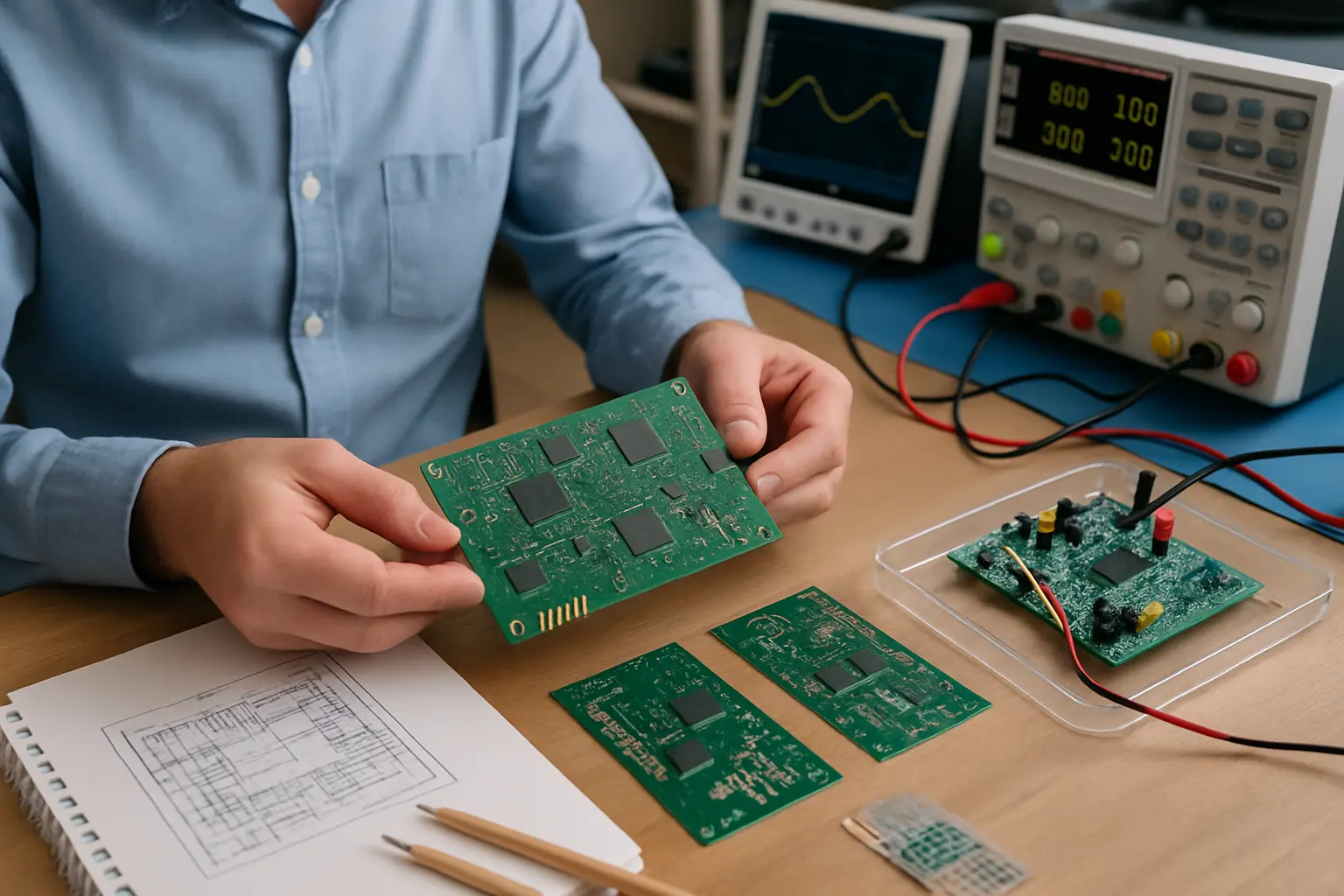
Send one or two fully assembled reference units, a small set of key spare components, and the physical parts that are hard to substitute. Label everything clearly and include a simple inventory checklist.
Frequently asked questions
- How many prototype boards should I send?
- Start with enough boards to cover bench testing, a couple of destructive tests if needed, and one or two spares for regression checks. The exact number follows your prototype purpose.
- What level of BOM detail is mandatory?
- At minimum include manufacturer part numbers, package type, and approved alternates. If the BOM lacks detail the assembler will need to source parts and confirm footprints, which adds time.
- Do I need a test fixture for the first run?
- If functional tests require nonstandard connectors or firmware programming, provide a simple fixture or temporary connector arrangement so boards can be exercised reliably.
- How do I handle firmware security for prototype programming?
- Provide a controlled method for delivering firmware (secure file transfer or encrypted binaries) and document any keys or certificates required for programming or booting.
This checklist helps product teams prepare prototype kits for a smoother manufacturing handoff without surprises.