
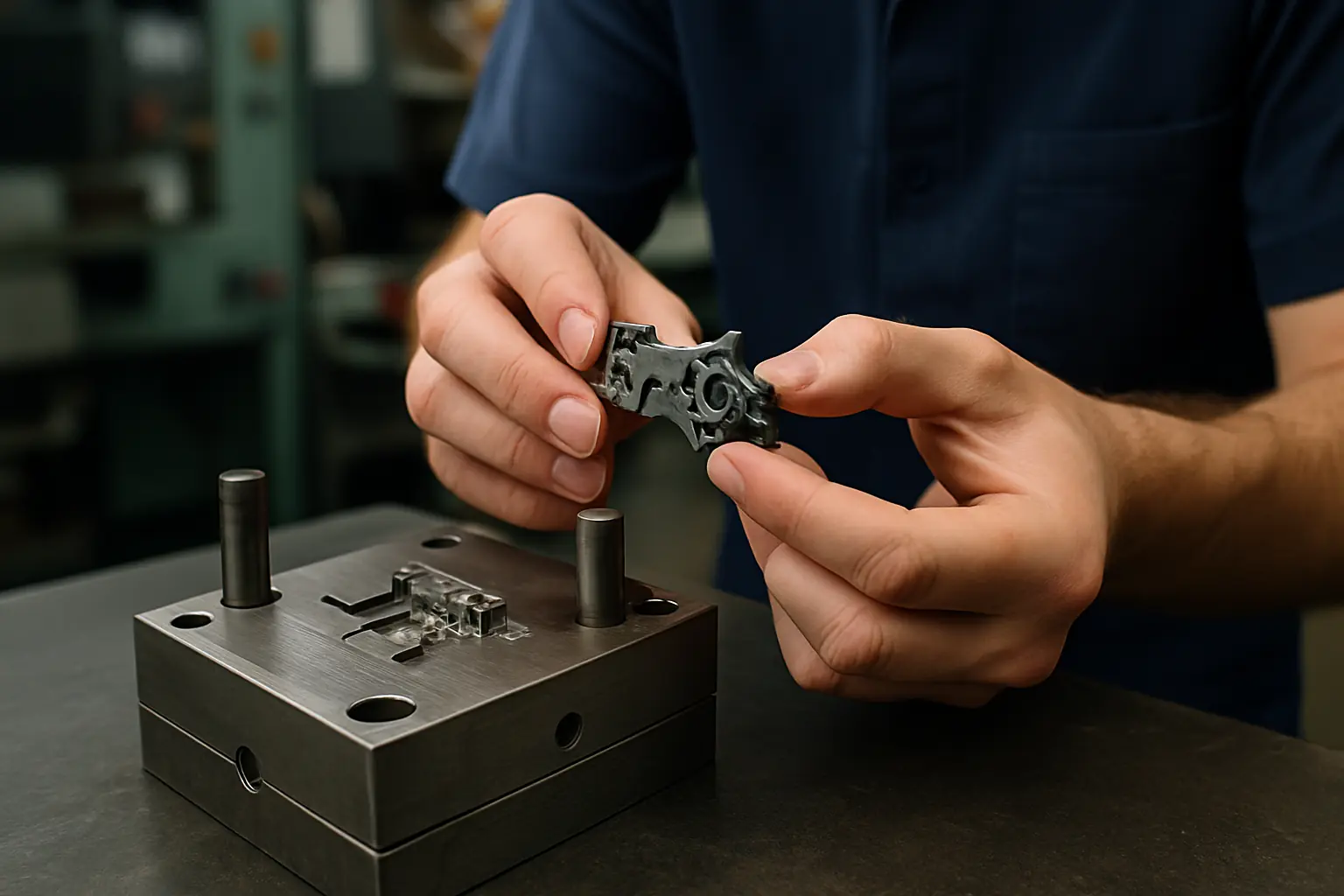
Metal Injection Molding: When It Fits a Complex Metal Part
Metal injection molding (MIM) is a manufacturing route that combines powder metallurgy and plastic injection-molding techniques to produce small, complex, near-net metal components. Use MIM when geometry, surface finish and repeatability matter, and when other processes would need extensive secondary machining or assembly.
What MIM does well
- Produces intricate geometries and internal features in a single operation, reducing part count and assembly steps.
- Delivers consistent, near-net-shape parts that often need only minimal finishing (deburring, light machining, plating or heat treatment).
- Works with a range of engineering alloys used for corrosion resistance, wear resistance or magnetic properties.
- Offers good dimensional repeatability and surface quality compared with many powder-based approaches.
When to consider MIM
Consider MIM when the part combines several of the following requirements:
- Complex 3D geometry, undercuts or thin walls that are difficult or expensive to machine.
- Small to moderate part size where cost-per-part with machining becomes high.
- High production volumes where tooling amortisation and repeatability matter.
- Material needs that include stainless steels, tool steels or specialised alloys compatible with MIM feedstocks.
Design and engineering points to check
Design for MIM is distinct from DFM for machining or die casting. Key practical considerations include:
- Shrinkage and tolerance planning: parts change dimension during binder removal and sintering; designs must allow predictable shrinkage and include features sized for the final condition.
- Wall thickness and ribs: aim for uniform cross-sections to avoid density variation and internal defects.
- Allowances for sintering-related porosity where full density is not required, or specify secondary densification or heat treatment when full density is needed.
- Gate location and feedstock flow: place gates to give even filling and avoid trapped binder pockets.
- Post-process needs: specify if critical surfaces require machining, grinding or plating so the process plan matches tolerances and finish targets.
When MIM is a poor fit
- Large structural parts where MIM geometry or feedstock economics do not scale well.
- Very low volumes where tooling cost and process setup outweigh the benefits of mass production.
- Requirements for full, stress-free bulk metal (for certain critical aerospace or high-cycle fatigue parts) where wrought or machined material properties are mandatory.
Alternatives to compare
Match part size, geometry and mechanical requirements to process strengths:
- CNC machining – flexible for low volumes and large parts, but costly for complex small geometries and high scrap from material removal.
- Powder metallurgy (press-and-sinter) – efficient for simple shapes and high volumes but limited in geometry complexity.
- Investment casting and die casting – good for larger castings and certain alloys; may require more machining and assembly for complex features.
Practical checklist before choosing MIM
- Verify alloy availability in MIM feedstock for required properties.
- Confirm expected tolerances and surface finish with the moulder and sintering partner.
- Plan for secondary operations early-heat treat, machining or plating must be integrated into cost and lead-time calculations.
- Request samples or prototypes to validate fit, finish and mechanical behaviour before committing to full tooling.
Conclusion
Metal injection molding is a practical choice for small, intricate metal components when you need repeatable geometry, near-net shape and reduced assembly. It is not a universal replacement for machining or casting, but when design complexity and production volume align, MIM can lower part count and simplify manufacturing.
If you’d like to discuss your electronics manufacturing requirements, prototype or production plan, contact Futurezen to review whether MIM or another metal process is the right fit for your part.