
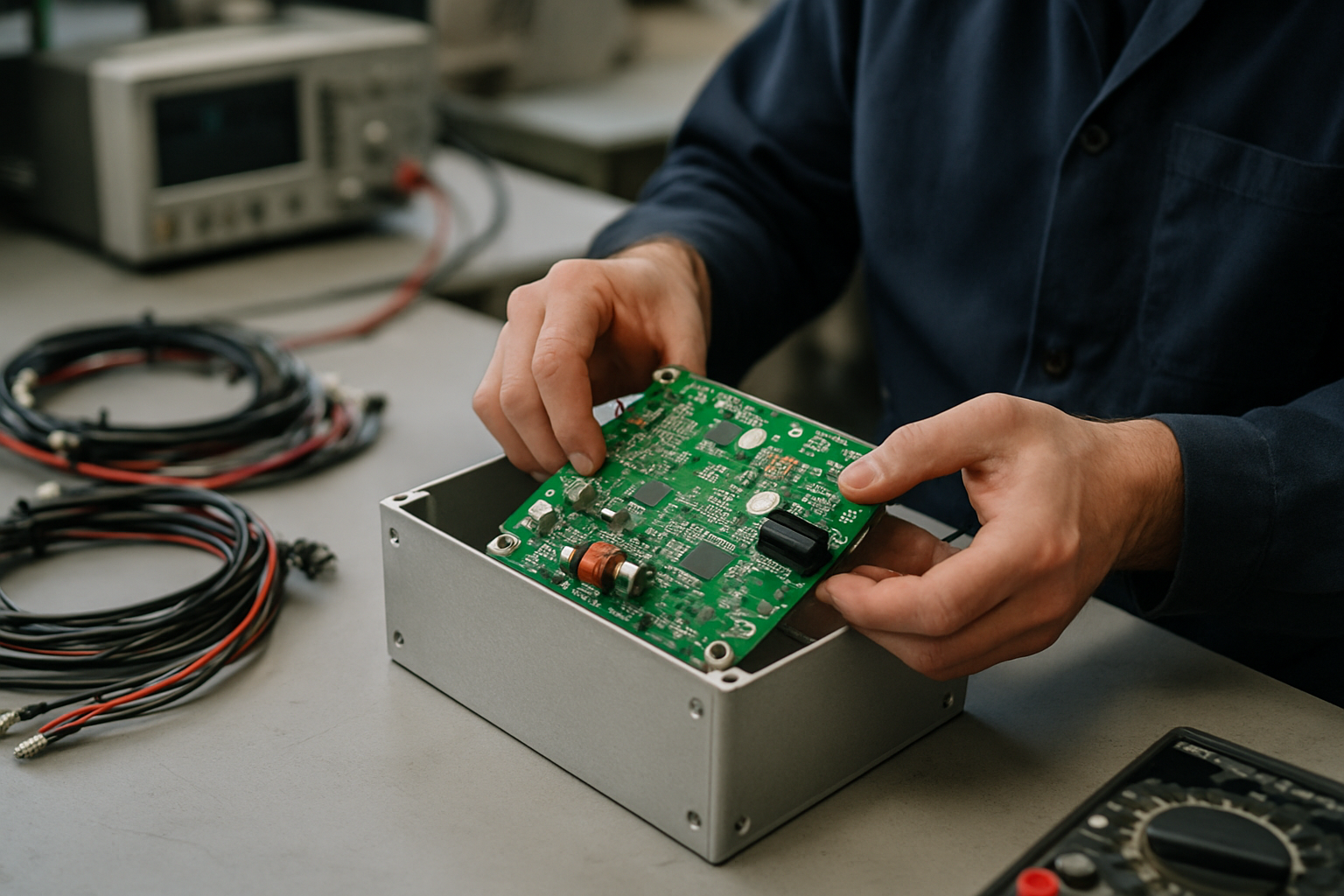
Decide who owns integration first. The main question is whether you want one partner to own the full product assembly through box build assembly services, or whether you prefer multiple specialist suppliers and accept more coordination. Choosing a single partner reduces coordination points and gives you one escalation path for schedule, quality, and integration issues. Choosing multiple suppliers can give access to specialist capabilities but requires you to manage more handoffs.
When a single partner is usually the better choice
A single partner is often preferable when you want fewer moving parts and faster cross-discipline iteration. This approach is helpful if you need:
- One point of contact for schedule and quality issues
- Faster diagnosis and fixes that cross cabling, mechanical fit, and testing
- Clear ownership of final product-level tests and acceptance criteria
By centralizing responsibility, a single partner coordinates cable and harness assembly, enclosure mounting, and product-level testing so integration problems surface and are resolved without repeated supplier handoffs.
When to keep work with multiple suppliers
Keep work separate when a specialist supplier offers a capability you cannot practically reproduce with one partner. Examples include unique enclosure finishing, proprietary harness tooling, or a specialist process that materially affects product quality or user experience. If you split suppliers, plan milestones around the physical interfaces where harnesses connect to boards and where internal parts meet the enclosure. Those interfaces are where most integration issues appear.
What do box build assembly services cover?
Box build assembly refers to the steps that turn a populated printed circuit board into a customer-ready unit. Typical elements included in a full box build are:
- Cable and harness assembly with connectors fitted and continuity checks
- Mechanical assembly, mounting PCBs inside the enclosure and securing fasteners
- Product-level functional checks such as power-up, firmware boot, and key feature verification
- Labeling, packing, and staging so units are ready to ship
This scope can be delivered by one supplier or divided among specialists depending on your priorities.
How a typical sequence reduces surprises
Organize the build so integration issues appear early and cost less to fix. A practical sequence you can expect from a partner or adopt with multiple suppliers is:
- Kickoff and parts review: confirm design intent, identify long-lead or custom components, and set how design changes will be approved.
- Sample harnesses and bench checks: make a few cable samples, check connector fit and routing on the bench before full assembly.
- Mechanical trial assembly: assemble one unit into the enclosure to validate physical fit, access, and fastener placement.
- Test development and first assembled sample validation: load firmware, run key input/output checks, and finalize test scripts and fixtures.
- Small trial batch: run a short pilot to exercise the production flow, review results, and apply tuning before ongoing production.
These steps shorten feedback loops and limit late-stage design changes.
About cable terminations and reliability checks
Some connectors require specific wire termination methods that use controlled tooling to form reliable electrical contacts. One common method mechanically compresses a metal sleeve onto the conductor to form a secure connection; this requires appropriate tooling and trained operators. When such terminations are needed, a partner may make harnesses in-house or coordinate with a trusted harness supplier. Choose the option that shortens feedback loops and catches fit or routing issues before scaling production.
| Your situation | Guidance |
|---|---|
| You want fewer moving parts and one point of contact | Choose a single partner to reduce coordination overhead and have one escalation path across assembly, harnesses, and testing. |
| You need rapid iteration when fit or function issues appear | Choose a single partner so the same team can diagnose and fix cross-discipline issues quickly. |
| You require a true specialist process | Use multiple suppliers when a unique finishing, tooling, or proprietary capability is essential. |
What testing typically appears in a full build
Product-level testing focuses on what matters to customers. Typical checks include power-up and boot, firmware load verification, key input and output behavior, cable continuity, and enclosure fit. Production tests are developed from the acceptance criteria you define so the same checks run on the first assembled sample and on production units.
For general safety and compliance guidance, refer to recognized electronics standards bodies that publish testing and safety information. Use those published standards to inform acceptance criteria and to decide when additional safety or regulatory testing is required.
Who remains responsible when one partner does the work
Even when a single partner handles the assembly, your team retains responsibility for customer-facing product decisions. Typical owner responsibilities are:
- Approval of acceptance criteria and production test limits
- Signoff on any design changes that affect fit, function, or safety
- Participation in milestone reviews and approval of the first assembled sample
Handing the work to a partner reduces technical coordination but does not remove the need for these decision points.
FAQ
Will a single supplier handle custom cable assembly as part of the box build?
Often. Many assembly partners either make harnesses in-house or coordinate with a trusted local supplier. Whether harnesses are made in-house depends on connector type, the required wire termination method, and tooling needs. Evaluate this at the parts review and choose the option that gives the shortest, most reliable feedback path.
How can I reduce surprises when moving from board to final product?
Reduce surprises by building the first assembled sample early, freezing test scripts and fixtures, and validating cable routing and enclosure fit before the small trial batch. Early physical checks limit late-stage changes and make milestone approvals more efficient.
Can one partner work with our existing supplier for part of the build?
Yes. You can map responsibilities so the existing supplier continues to provide a specialist service while the assembly partner owns final integration and product acceptance. Arrange a joint first assembled sample so you can sign off before scaling.
Next step: To decide whether a single partner or split-supplier approach fits your product plan, discuss your electronics manufacturing requirements, prototype or production sequence with Futurezen.
Author: Futurezen editorial team