
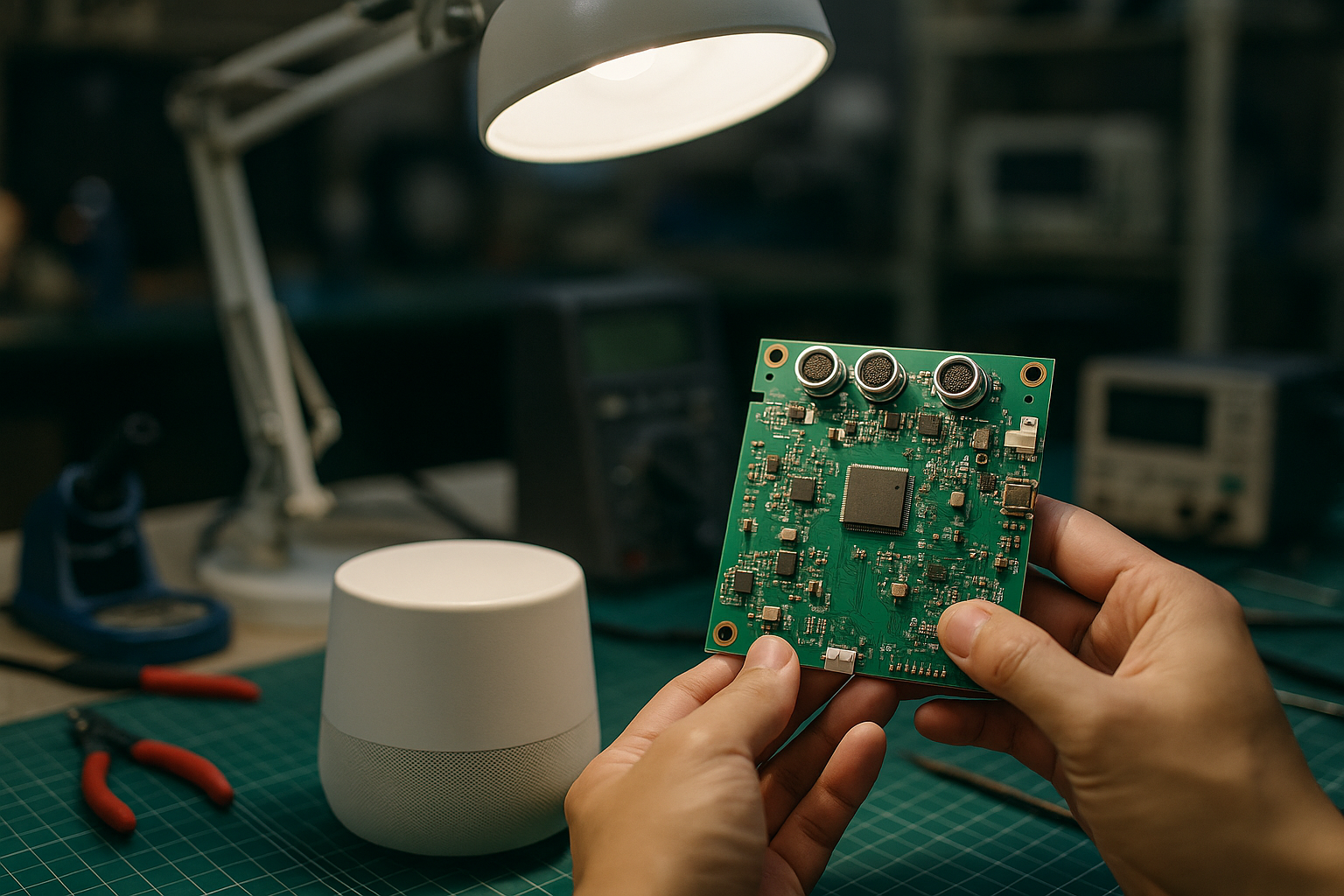
Decide the simplest architecture that delivers the user trust you promise, without expanding your internal engineering team. This article helps product managers pick between cloud-first, local-first, or hybrid approaches so you can ship a working product that preserves always listening device privacy and meets your roadmap.
Decision checklist
- Do you need offline function or a strong privacy signal to win users? If yes, favor local-first or hybrid.
- Do you need a fast user trial or proof of concept? If yes, cloud-first shortens early development work.
- Can you stage features? If yes, hybrid lets you ship sooner and improve on-device behavior later.
Which architecture preserves always listening device privacy and balances time to market?
There are three realistic routes, each describing what you promise users and what the first demos look like. Cloud-first relies on server processing for wake-word and language tasks, which often shortens early device work. Local-first runs more activation and recognition on the device itself, which is a clearer privacy signal to customers and supports offline use. Hybrid splits tasks so you can ship a usable product quickly while improving on-device behavior over time.
Which architecture gets my product to market sooner?
If you need a fast trial with real users, cloud-first typically reduces initial device engineering because remote services handle heavy processing. Local-first takes longer up front because on-device processing and validation are more involved. Hybrid gives you a practical path: deliver a working demo early, then iterate to increase on-device functionality and always listening device privacy on later builds.
How do these choices change what our teams actually do?
Think in product terms, not low level tasks. With cloud-first, your product work focuses on account and consent flows, connectivity behavior, and messaging so users understand when audio leaves the device. With local-first, you prioritize visible trust features, and you rely on your manufacturing partner to handle the device software and test sequencing. Hybrid requires parallel planning so backend and device deliverables line up for demos and acceptance testing.
| Option | Time to market | Team complexity | Trust signal | Manufacturing implication |
|---|---|---|---|---|
| Cloud first | Shorter initial timeline | More backend and consent work | Users may be more concerned about audio leaving the device | Simpler early boards, focus on connectivity checks |
| Local first | Longer development time | More device software and hardware planning | Stronger perceived privacy when designed clearly | On-device processing and additional factory verification |
| Hybrid | Moderate timeline | Shared across device and backend | Balanced trust when roles are clear | Mixed board and test requirements |
When should I prioritize a physical mute?
Visible indicators and a physical microphone mute are simple, memorable trust signals. A physical mute that disconnects the microphone electrically is the clearest proof for users that audio is stopped. Prioritize a physical mute when trust is a product differentiator, or when user research shows buyers expect a tangible control. Even if you plan to add the mute later, include its parts and placement in early prototypes so it can appear in the first user-visible builds.
How should I think about wake-word, local processing, and consent?
Use plain definitions so decisions are actionable. A wake-word is the specific phrase that moves a device from passive listening to active capture. Local processing means the device runs the activation and some recognition without sending raw audio to servers. Consent flows are the screens and messages you show users to explain what is recorded, when audio leaves the product, and how long anything is kept.
Local processing reduces the need to send raw audio to servers and improves perceived always listening device privacy, but it changes parts and testing so plan that with your partner. For regulatory context and checklist items to reflect in user messaging, consult official guidance such as the GDPR resource at gdpr.eu.
How will a manufacturing partner handle firmware, startup checks, and updates?
Manufacturing sequencing is something you delegate to a partner. Firmware is the device software that runs hardware functions and user-facing indicators. Startup checks are automated tests the device runs on power up. A good partner sequences parts, locks audio-path components early, and verifies visible trust features like LEDs and mute switches on first boards so you get meaningful prototypes quickly.
Plan an update path that you can operate reliably. Secure update mechanisms and signed firmware are choices that affect factory validation. A partner that builds test fixtures and automated checks into early runs helps you avoid surprises while you keep the product decisions and user messaging in focus.
How is this handled in a real build?
In practice, teams sequence decisions to reduce unknowns. Parts that affect the audio path are fixed early, visible trust features are validated on first boards, and server and consent flows are finalized in parallel. This approach lets you demo a unit to users and observe their trust reactions while backend work finishes, and it keeps always listening device privacy improvements on the roadmap rather than blocking launch.
What manufacturing implications should I plan for?
Most manufacturing implications are about sequencing. Local-first products need attention to processor and memory choices, and on-device testing. Cloud-first products shift focus to connectivity integration and account flow validation. Either way, the partner builds test fixtures and verification steps into the first test runs so you have prototypes that reflect your trust choices and acceptance criteria.
FAQ
Will local processing eliminate all privacy concerns?
Local processing reduces one class of concern by limiting when audio is sent off device, but you still need clear messaging, visible indicators, secure handling of any local data, and a plan for updates.
How should I explain always listening device privacy to users?
Use simple language: say what triggers recording, what stays on the device, when audio is sent to servers, and how long data is kept. Put this in the setup flow and documentation so expectations are clear.
Do I always need a physical microphone mute?
A physical mute that disconnects the microphone is the strongest visible signal. Treat it as a strategic choice tied to your product promise and user research, not a mandatory line item.
How can I implement these choices without a large internal engineering team?
Work with a development and manufacturing partner that sequences parts, early builds, and factory verification for you. Your role is to define which trust features are required now and which can be phased in through updates.
If you want to map the right architecture for your product, review what the first builds will include, or discuss prototype to production sequencing, contact our team at /contact/ to set up a short call. Shenzhen Futurezen Co. Ltd. can help translate your product decisions into prototype hardware and a clear manufacturing plan.