
Quick answer for hardware teams: plastic tooling vs CNC enclosure
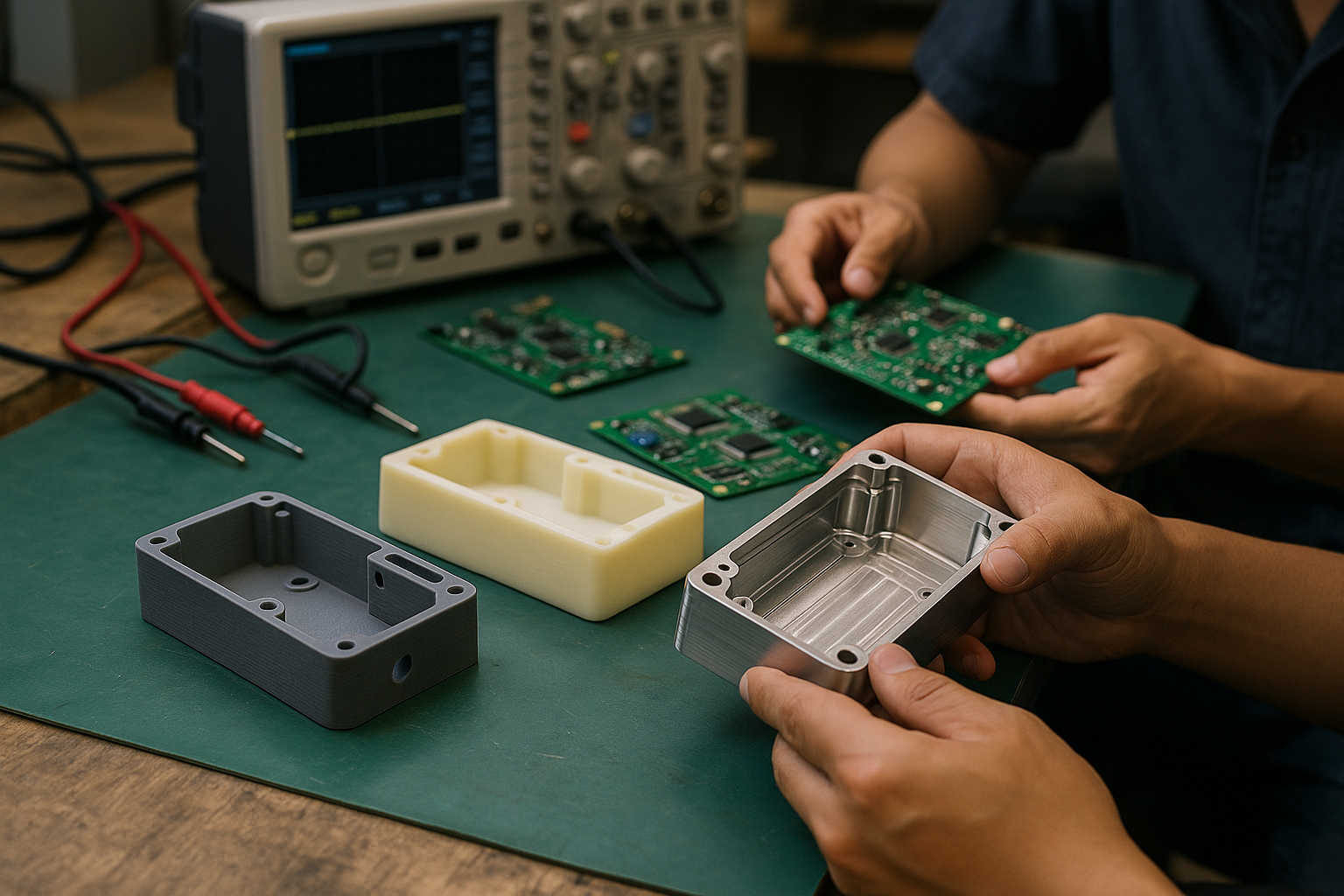
If you are deciding between plastic tooling vs CNC enclosure, start with your target volumes, tolerance and surface requirements, revision cadence, and certification path. For one or a few prototypes, 3D printing or CNC parts are fastest. For pilot runs where you need production-like plastic parts, soft tooling or urethane casting is a good bridge. For mid to high volume production, injection molds are usually the right choice, but only after a design freeze and a clear MOQ and cost model.
How to read this guide: plastic tooling vs CNC enclosure
This guide compares CNC machined enclosures, 3D printing, soft tooling (urethane cast), and injection molding across prototype speed, unit cost, tolerance, finish, durability, revision cost, and typical MOQ. To avoid confusion, this article uses the term enclosure consistently to mean the product outer shell or casing. Plastic tooling in the text refers specifically to soft tooling or injection mold tooling used to produce plastic enclosures. The aim is practical guidance for sourcing and engineering tradeoffs, not a definitive cost quote. Vendor and lab verification is recommended before committing to a path.
Summary of manufacturing paths: plastic tooling vs CNC enclosure
- 3D printing: fastest for concept and functional prototypes. Low setup cost, good for fast revisions, limited surface finish and long term durability depending on process.
- CNC machined enclosures: excellent tolerances and finishes from plastic or metal stock, good for fit and functional tests, higher per unit cost at larger volumes but reliable for test hardware and EMC fixtures.
- Soft tooling and urethane casting: lower cost molds for short runs, parts that look and feel like production plastic, useful for pilot production, certification, and preproduction validation.
- Injection molding: high upfront tooling cost, low part cost at scale, best surface finish and repeatability once the design is frozen and validated.
Comparison table – decision framework: plastic tooling vs CNC enclosure
| Method | Prototype speed | Unit cost at 1-50 | Typical tolerance | Surface finish | Durability | Revisions | Typical MOQ |
|---|---|---|---|---|---|---|---|
| 3D print (FDM or SLA) | Days | Low | ±0.2 to 0.5 mm | Matte to high detail for SLA | Low to medium | Very easy, low cost | None |
| CNC machined enclosure | Days to 1-2 weeks | Higher per part at small qty | ±0.05 to 0.2 mm | Excellent machined finish | High | Moderate cost to revise | None |
| Soft tooling / urethane cast | 1-3 weeks | Medium | ±0.1 to 0.3 mm | Good with finishing | Medium | Relatively low cost to revise | 10s to low 100s |
| Injection mold | 6-12 weeks | Low per part at scale | ±0.03 to 0.1 mm | Excellent, high repeatability | High | Expensive to revise | 1000s depending on mold type |
When to choose CNC enclosures: plastic tooling vs CNC enclosure
Choose CNC machined enclosures when you need tight tolerances, material strength, or a near production fit and finish without committing to tooling. CNC is often the best option for functional prototypes, EMC test hardware, camera housings, and RF products where connector alignment and shielding matter. You will pay more per part at small volumes compared with molded parts, but you get durable samples that can survive rigorous lab testing and accurate mechanical interfaces for assembly trials.
When plastic tooling or injection molding makes sense: plastic tooling vs CNC enclosure
Plastic tooling, meaning soft tooling or steel injection molds, becomes economical when projected volumes and the required unit cost justify tooling investment. Injection molding pays off for several thousand units or more, depending on part complexity and surface finish. Soft tooling or urethane casting is a pragmatic intermediate option for pilot production and certification runs when you want production-like plastics but are not ready to invest in steel tooling. Always run a break even analysis specific to your geometry, material, finish, and expected yield.
Tolerance and finish tradeoffs: plastic tooling vs CNC enclosure
If your device depends on optical alignment, RF gasketing, or precise mechanical mounting, injection molding and CNC deliver the best tolerances. 3D printing and soft tooling can meet many functional requirements, but critical features may need secondary machining, inserts, or finishing. Specify measurement points and acceptance criteria in supplier quotes to avoid surprises during validation.
Revisions and engineering iterations: plastic tooling vs CNC enclosure
Early in the development cycle, aim for low cost, high flexibility methods so you can iterate quickly. 3D prints and CNC let you test fit, function, and assembly. As design risk decreases and test outcomes are positive, move to soft tooling for pilot units or directly to injection molds once the exterior form and internal mounting bosses are frozen. Plan revision gates, and include potential mold modification costs in your schedule if you expect late changes.
When should you move from sample casing to tooling? plastic tooling vs CNC enclosure
Move to tooling when the following are true:
- Exterior form and key mounting points are mechanically frozen.
- PCB layout and internal BOM are stable enough to set bosses, clips, and cable routing.
- Key certification tests have passed with production-intent materials or validated intermediates.
- Projected volumes make tooling economically justified after a cost model is run, including expected scrap and cycle time.
Practical procurement and BOM notes: plastic tooling vs CNC enclosure
When collecting quotes, ask suppliers to separate mold cost, per part cost, cycle time, and expected cavity life. For CNC, confirm material grade, surface specification, and any post machining operations like anodize or painting. For injection molds, verify gate type, expected cavity life, and whether family molds or multi-cavity options can reduce lead time and MOQ. Include tooling lead times in your schedule and confirm supplier capacity and quality control processes. Always validate material properties and part performance with independent lab testing where certification or safety is involved. See ISO for standards and guidance that may apply to your product class.
FAQ: plastic tooling vs CNC enclosure
Q: What is the fastest way to get a functional enclosure? (plastic tooling vs CNC enclosure)
A: 3D printing produces concept and functional samples fastest, typically within days. CNC can also produce functional samples quickly with production-like strength and tolerance. Choose 3D printing for rapid iterations and CNC when you need production-level fit, finish, or material properties.
Q: How do unit costs compare between tooling and CNC? (plastic tooling vs CNC enclosure)
A: At low volumes, CNC and 3D prints have higher per unit cost but no tooling outlay. Injection molding requires a large upfront cost and has much lower per unit cost at scale. Soft tooling provides a middle ground for pilot volumes. Run a break even analysis that includes tooling amortization, expected yield, and finishing operations.
Q: When should I use soft tooling? (plastic tooling vs CNC enclosure)
A: Use soft tooling when you need a small batch of parts that closely mimic production plastic for certification or user testing, but you want to delay the expense of steel tooling until design validation is complete.
Q: What is the recommended path for products with RF or antenna sections? (plastic tooling vs CNC enclosure)
A: Validate antenna and EMC behavior with representative materials early. CNC prototypes are useful for shielding, connector alignment, and mechanical tests. For final certification, use production grade materials via soft tooling or injection molding to avoid late failures caused by differing dielectric properties.
Q: How will this manufacturing decision affect sourcing and schedule? (plastic tooling vs CNC enclosure)
A: The choice determines supplier type, lead times, BOM structure, and certification schedule. Early choices favor flexibility, lower up front cost, and faster iterations. Later choices favor repeatability, lower unit cost, and consistent finish. Align supplier capabilities with your test plan and include contingency for mold fixes and finish validation.
Next steps and call to action: plastic tooling vs CNC enclosure
If you need help mapping cost, schedule, and certification risk to a practical plan for enclosures, contact Futurezen. Our Shenzhen-based product development and manufacturing team can help with design for manufacturability reviews, BOM tradeoffs, and sourcing options. Contact Futurezen, legal entity Shenzhen Futurezen Co. Ltd., to discuss your product architecture, certification path, and a manufacturing plan tailored to your device and volume targets. We recommend getting vendor quotes and independent lab verification before final tooling commitments.