
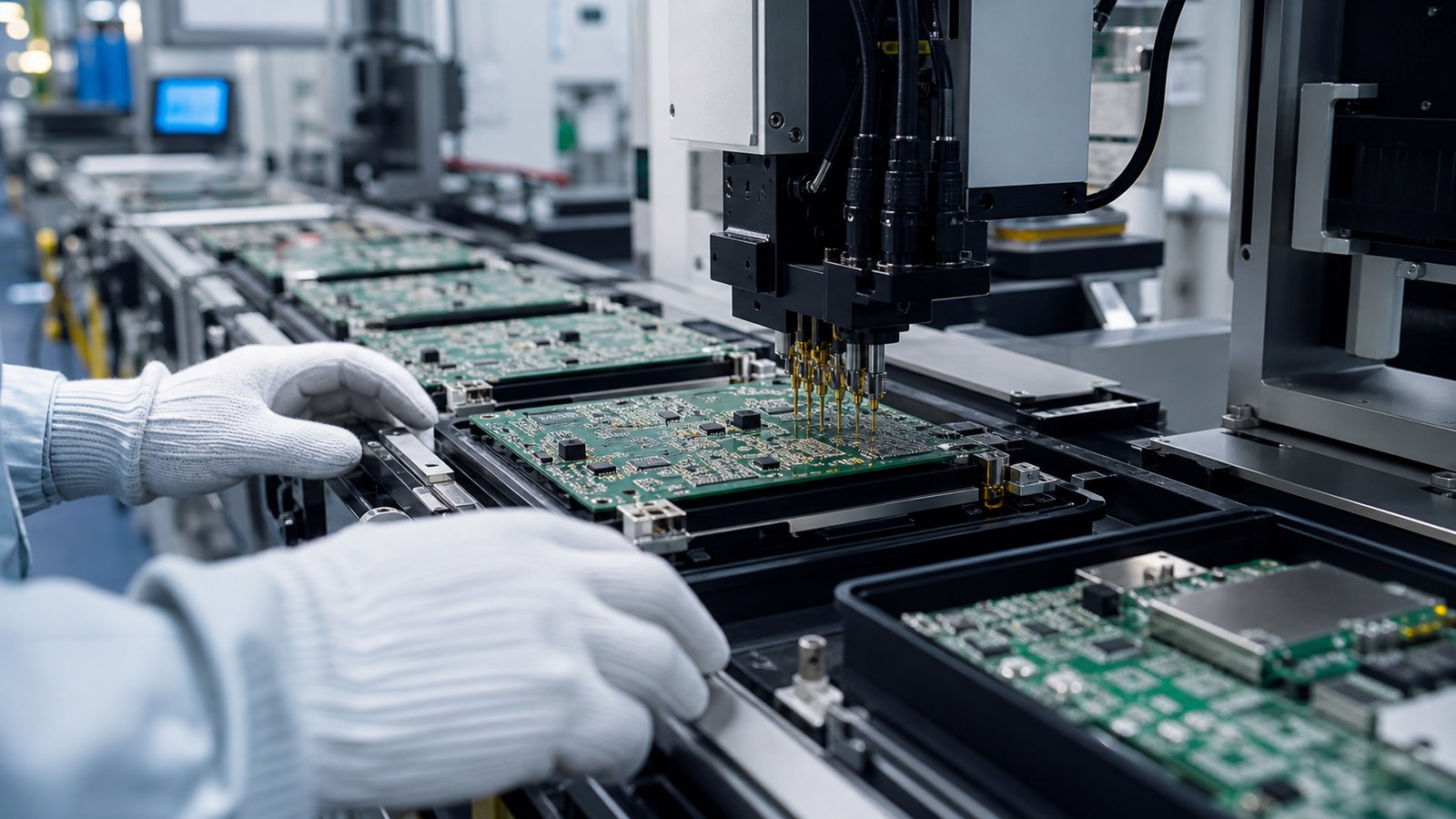
Choosing an OEM electronics manufacturer is not only a sourcing decision. It is a production decision that affects quality, lead time, cost, communication, and how smoothly your product can move from prototype into volume manufacturing.
For hardware teams, startups, and product companies, the difficult part is that many suppliers can quote a PCB assembly or a finished unit. Fewer can help you spot design, tooling, BOM, testing, and scale-up risks before those risks become expensive production problems.
This guide gives you a practical way to evaluate an OEM electronics manufacturing partner before you commit your drawings, BOM, tooling budget, or production timeline.
Start With Manufacturing Fit
The first question is not simply whether a supplier can manufacture electronics. The better question is whether their capabilities match the product you are building.
For an electronics product, that may include PCB fabrication, PCB prototyping, SMT assembly, through-hole assembly, BGA assembly, rigid-flex PCB assembly, box build, enclosure work, testing, packaging, and final inspection. If your product includes plastics, silicone, weatherproofing, installation hardware, or custom enclosure requirements, tooling and mechanical design support also become part of the manufacturing fit.
Before asking for a final quote, confirm which parts of the process the OEM can handle directly and which parts are outsourced. Outsourcing is not automatically bad, but unclear responsibility can create delays when something goes wrong.
Check the Path From Prototype to Volume Manufacturing
A prototype that works once is not the same as a product that can be built repeatedly at scale. A strong OEM electronics manufacturer should understand the transition from engineering samples to stable production.
Ask how the supplier reviews a design before production. A useful review should look beyond component placement and include manufacturability, assembly risk, testing access, enclosure constraints, cable routing, connector durability, thermal behavior, and production yield.
If the manufacturer can support both early prototyping and large-volume manufacturing, the handoff is usually smoother. The same team can carry production lessons back into the design, BOM, tooling, and test plan before the product reaches a point where changes become expensive.
Ask About DFM, Tooling, and BOM Optimization
Good OEM work is not just building what is sent over. It is helping the buyer avoid preventable manufacturing issues.
Design for manufacturing review should identify parts that are difficult to source, components with long lead times, layout choices that complicate assembly, enclosure details that slow production, or materials that push cost higher than necessary.
BOM optimization matters especially when a product is moving toward volume manufacturing. A manufacturer familiar with component sourcing and assembly can often suggest equivalent parts, packaging changes, connector choices, or process improvements that reduce cost without weakening the product.
For products involving plastic or silicone parts, ask how the OEM handles tooling. Tooling for plastics, silicone, weatherproofing, and installation features can affect the product’s reliability as much as the electronics do.
Review Assembly and Testing Capabilities
Assembly capability should be specific, not vague. For PCB assembly, ask whether the manufacturer supports SMT, through-hole, BGA, and rigid-flex PCB assembly if those are relevant to your product.
Testing is just as important as assembly. A production plan should define what is inspected, what is electrically tested, what is functionally tested, and what happens when a unit fails. For many products, the right answer is not one test at the end. It is a combination of incoming inspection, in-process checks, PCBA-level testing, final product testing, and traceable records.
For connected products such as IoT devices, smart home hardware, surveillance products, POS systems, or wearables, testing may also need to include wireless behavior, enclosure fit, button and connector durability, firmware loading, calibration, or environmental considerations.
Evaluate Communication and Documentation
Communication is easy to underestimate until a project is already late. The right OEM partner should be clear about what they need from you, what assumptions they are making, and which parts of the quote are still uncertain.
At minimum, expect organized communication around drawings, Gerbers, BOM files, firmware requirements, enclosure files, tooling status, sample feedback, change requests, test requirements, lead times, and packaging instructions.
Good documentation protects both sides. It also makes it easier to repeat production later without rebuilding project knowledge from scattered emails and old file versions.
Watch for Warning Signs
Some supplier problems show up before production begins. Be careful when a manufacturer gives a fast quote without asking technical questions, cannot explain the assembly process, avoids discussing testing, gives unclear lead times, or treats every design as production-ready.
Another warning sign is a supplier that only competes on unit price. The lowest initial quote can become expensive if it creates rework, scrap, missed delivery dates, quality disputes, or redesign work after tooling has started.
OEM Electronics Manufacturer Checklist
- Can they support the PCB, assembly, enclosure, testing, and packaging scope your product needs?
- Do they review DFM before production instead of simply building from files?
- Can they help with BOM optimization and cost reduction for volume manufacturing?
- Do they support the assembly technologies your product requires, such as SMT, through-hole, BGA, or rigid-flex?
- Is there a clear test plan for prototypes, production samples, and final units?
- Can they explain lead-time drivers such as components, tooling, assembly, testing, and packaging?
- Do they communicate assumptions, risks, and change requests clearly?
- Do they have experience with products similar to yours, such as IoT, smart home, surveillance, POS, wearables, or consumer electronics?
How Emszen Can Help
Emszen is based in Shenzhen, China, at the center of the electronics supply chain. The team supports PCB fabrication, PCB prototyping, SMT, through-hole assembly, BGA assembly, rigid-flex PCB assembly, design and tooling, product development, BOM optimization, assembly, testing, and volume manufacturing support.
For buyers who are still between prototype and production, that combination matters. It means manufacturing feedback can be connected to product design, tooling decisions, cost reduction, assembly planning, and quality control before production starts.
If you are evaluating an OEM electronics manufacturer for a new or existing product, contact Emszen to discuss your product stage, BOM, drawings, production goals, and the practical next steps for manufacturing.
FAQ
What is an OEM electronics manufacturer?
An OEM electronics manufacturer builds products or assemblies for another company, usually based on the buyer’s design, specifications, BOM, quality requirements, and production goals.
What should I prepare before contacting an OEM manufacturer?
Prepare your product description, target quantity, BOM, Gerber files, drawings, enclosure files, firmware or testing requirements, quality expectations, and any current prototype or production issues.
Should I choose an OEM that also supports tooling and assembly?
If your product includes enclosures, silicone parts, weatherproofing, installation details, or final product assembly, choosing an OEM that understands tooling and assembly can reduce handoff problems and improve production readiness.
Ready to Review Your OEM Manufacturing Plan?
Share your product stage, target quantity, BOM, Gerber files, drawings, enclosure requirements, or current production challenge. Emszen can help you identify the practical next steps for PCB fabrication, assembly, tooling, testing, and volume manufacturing.